South America’s climate is beautiful — and brutal on building materials. From the humid rainforests of Brazil to the intense UV exposure across Colombia, Peru, and Ecuador, exterior wall systems face constant moisture, heat, and biological attack. Traditional timber cladding rots, warps, and invites termites. Standard WPC (Wood-Plastic Composite) panels fade and absorb water over time. This is exactly why architects, distributors, and contractors across the region are switching to co-extrusion wall panels — and specifically, the 219×26mm Wall Panels, one of the most popular profiles for exterior wall cladding in Latin American markets today.
What Is Co-Extrusion Wall Panel?
Co-extrusion (also called capstock technology) is a manufacturing process that produces a wall panel with two integrated layers in a single extrusion pass:
- Core layer: A dense composite of wood fiber (or bamboo fiber) and HDPE/PE plastic, engineering for strength, dimensional stability, and load-bearing performance.
- Outer protective shell (capstock): A weather-resistant polymer layer fused directly onto the core, forming a physical barrier against moisture, UV rays, mold, and staining.
Unlike single-layer WPC panels, where the wood fiber is exposed at the surface and gradually absorbs water and sunlight damage, a co-extruded panel seals the core completely. This single design difference is why co-extrusion panels typically outperform standard WPC boards by several years in humid, high-UV environments — precisely the conditions found across most of South America.
Why the 219×26mm Wall Panels Fits the South American Market
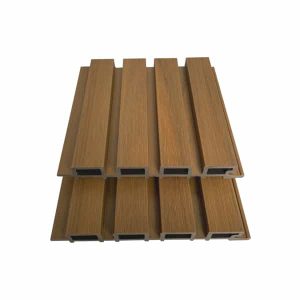
The 219×26mm WPC Wall Panels (often called “muro de piedra” style or wave-grain wall panel in Spanish and Portuguese-language markets) has become a go-to size for several practical reasons:
- Optimized width-to-thickness ratio— 219mm width provides efficient wall coverage while the 26mm thickness delivers the rigidity needed for both residential facades and commercial exterior walls, reducing panel count and installation labor.
- Distinctive embossed wave-grain surface— The Co-extrusion wall panels profile features a raised, rhythmic wood-grain texture that mimics natural stone or timber cladding, a look that is in high demand for villa exteriors, garden walls, boutique hotels, and commercial storefronts across Brazil, Argentina, Chile, Colombia, and Peru.
- Hidden/clip-in installation system— The panel’s tongue-and-groove or clip-mounted edge design allows for a fastener-free finished surface, which is both aesthetically preferred and faster to install — a major advantage for contractors managing large-scale housing or hospitality developments.
- Compatible with standard keel/furring systems— The 219×26mm dimension works efficiently with common aluminum or WPC keel spacing used throughout South American construction practices, simplifying import logistics and on-site assembly.
Key Performance Benefits for Humid & High-UV Climates
South American buyers evaluating exterior wall panels should prioritize the following co-extrusion advantages:
- Superior UV and color stability— The capstock layer resists fading, which matters enormously in equatorial and near-equatorial regions with year-round strong sun exposure (northern Brazil, Colombia, Ecuador, Venezuela).
- Water and humidity resistance— Rainforest and coastal humidity cause standard wood and single-layer composites to swell and crack. Co-extrusion’s sealed shell keeps moisture absorption to a minimum.
- Termite and insect resistance— A critical requirement in tropical and subtropical zones where wood-boring insects are a persistent problem for natural timber facades.
- Low maintenance, no painting required— No need for periodic sealing, staining, or repainting, reducing long-term ownership costs — an important selling point for hotels, resorts, and residential developers focused on lifecycle cost.
- Fire and mold resistance— The composite core combined with the protective outer layer improves fire performance ratings and resists mold/mildew growth in high-humidity installations.
- Eco-friendly composition— Made from recycled wood fiber and plastic, appealing to the growing green-building and LEED-certification demand in South American commercial real estate.
Applications Across South America
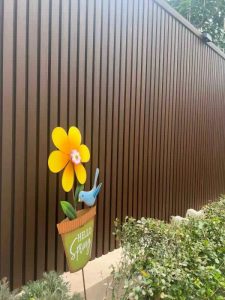
The 219×26mm Great Wall co-extrusion wall panel is widely used for:
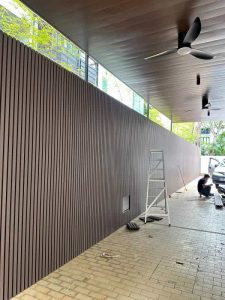
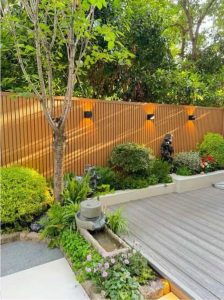
- Villa and residential exterior facade cladding
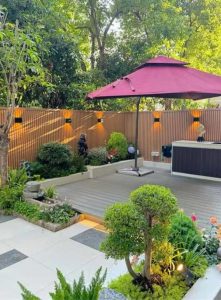
- Garden walls, fences, and privacy screens
- Hotel and resort exterior design
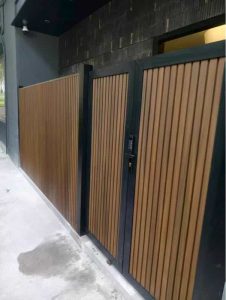
- Commercial storefront and shopping center facades
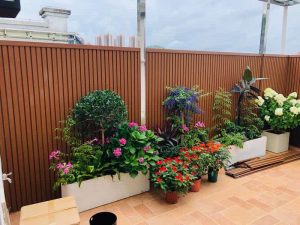
- Balcony and terrace wall accents
- Renovation projects replacing damaged wood or cement-fiber cladding
Co-Extrusion vs. Traditional Materials
| Feature | Co-Extrusion WPC Panel | Solid Wood | Cement Fiber Board |
| UV/Fade Resistance | Excellent | Poor | Moderate |
| Moisture Resistance | Excellent | Poor | Good |
| Termite Resistance | Excellent | Poor | Excellent |
| Maintenance | Minimal | High (staining/sealing) | Moderate |
| Installation Speed | Fast (clip system) | Moderate | Slow |
| Weight | Lightweight | Moderate | Heavy |
| Design Texture Options | High (embossed wood-grain) | Natural but variable | Limited |
Sourcing Co-Extrusion WPC Wall Panels for the South American Market
For importers, distributors, and construction companies in Brazil, Argentina, Chile, Colombia, Peru, and neighboring countries, the 219×26mm Great Wall Board offers a reliable balance of aesthetics, climate performance, and installation efficiency. When sourcing, buyers should confirm:
- Capstock layer thickness and UV-stabilizer formulation suited for tropical/equatorial exposure
- Compliance with local building codes and fire-rating requirements
- Available surface finishes (wood-grain embossed, brushed, matte)
- Container loading efficiency for the 219×26mm profile to optimize shipping costs to South American ports
Conclusion
As South American construction markets continue to move away from traditional wood and cement-based cladding toward modern, low-maintenance composite solutions, co-extrusion wall panels — led by the popular 219×26mm WPC Wall Panels — are positioned as the practical, durable, and design-forward choice for exterior wall applications across the region’s diverse and demanding climates.