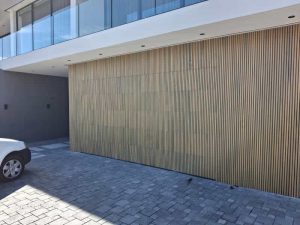
What Is Co-Extruded Wall Cladding?
Co-extruded cladding, sometimes called capped composite cladding or second-generation WPC cladding, is made from a wood-plastic composite (WPC) core wrapped in a thin, durable polymer cap layer. Both layers are produced together in a single extrusion process, so the shell bonds permanently to the core.
Why this matters:
- Better protection: The outer capping shields the core from water absorption, stains, mould and fading.
- Improved colour stability: The cap contains UV stabilisers and pigments that help prevent bleaching in strong sunlight.
- Realistic wood-grain finish: Embossed textures give an authentic timber look without the upkeep.
- Longer service life: Compared with uncapped WPC, co-extruded boards generally perform better against weathering and staining.
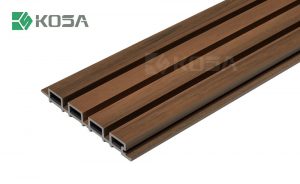
Specification of 219 x 26 mm Co-Extruded Cladding Board
The 219 x 26 mm profile offers a wide, substantial board face with a robust thickness, giving facades a clean, contemporary look with fewer joints than narrower boards.
| Feature | Specification |
| Board size | 219 mm (width) x 26 mm (thickness) |
| Material | Wood-plastic composite core with co-extruded polymer cap |
| Standard length | 2.9 m / 3.6 m /4 m, can be customized |
| Surface finish | Wood grain embossed / brushed |
| Colours | Charcoal, Teak, Walnut, Light Grey – can be customized |
| Fixing method | Concealed clip system / stainless steel screws |
| Application | Exterior walls, facades, gable ends, garden buildings, fences |
Key Benefits of Co-Extruded Outdoor Wall Cladding
1. Low Maintenance, No Painting or Staining
Unlike softwood or hardwood cladding, composite boards do not need annual oiling, staining or varnishing. An occasional wash with water and a soft brush is usually all that is required, which saves both time and long-term cost.
2. Weather and Moisture Resistance
Outdoor conditions can be demanding: persistent rain, freeze-thaw cycles and strong sunlight. The protective cap layer helps the board resist water ingress, rot, mould growth and insect attack.
3. UV and Fade Resistance
Colour consistency is a common concern with exterior products. Co-extruded boards are formulated to limit fading, helping your facade keep an even, attractive tone through the seasons.
4. Sustainable and Eco-Conscious
WPC cladding is commonly made with recycled plastics and reclaimed wood fibres, reducing the demand for virgin timber. It is also recyclable at end of life in many cases. [Add your recycled content percentage if available.]
5. Easy and Fast Installation
The 219 mm width covers more wall area per board than narrow profiles, which can reduce installation time. With a hidden clip system, fixings remain invisible for a neat, modern finish.
6. Contemporary Design Flexibility
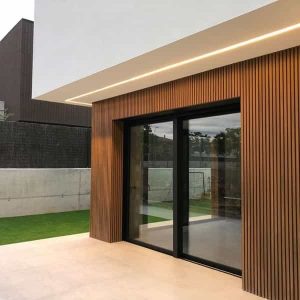
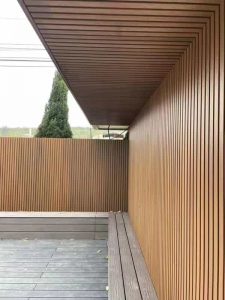
Use the boards horizontally for a classic look, vertically to emphasise height, or combine colours for feature walls, porches and garden rooms.
Where to Use 219 x 26 mm Composite Wall Cladding
- Residential facades:new builds, extensions and renovations
- Garden rooms, offices and summer houses
- Commercial buildings:hotels, restaurants, retail units
- Gable ends, porches and entrance areas
- Garden walls, privacy screens and fence feature panels
- Balcony and terrace side walls
Composite Vs. Timber vs Fibre Cement Cladding
| Co-Extruded Composite | Natural Timber | Fibre Cement | |
| Maintenance | Very low | High (regular treatment) | Low to medium (repainting may be needed) |
| Moisture resistance | Excellent | Moderate | Good |
| Wood-like appearance | Realistic embossed grain | Authentic | Limited |
| Colour stability | Good to excellent | Weathers to grey | Depends on coating |
| Installation | Simple, clip system | Simple | Heavier, more demanding |
| Lifespan | Long | Varies with species and care | Long |
Installation Guide: How to Fit Composite Wall Cladding
Always follow the manufacturer’s installation manual and local building regulations. In general:
- Prepare the substrate.The wall must be sound, clean and flat.
- Fix vertical battens.Use treated timber, aluminium or composite battens, typically at 400 mm centres or as specified. Horizontal board installation normally requires vertical battens.
- Allow for ventilation.Maintain a ventilated cavity behind the cladding, and fit insect mesh or ventilation strips at the top and bottom.
- Start at the bottom.Fix the starter clip and first board, keeping the correct distance above ground level.
- Clip and slide.Install boards one by one with concealed clips, leaving expansion gaps as recommended, since composite materials expand and contract with temperature.
- Finish with trims.Use matching corner, start and end trims for a neat, weather-tight result.
Tip: Store boards flat and out of direct sun before installation, and let them acclimatise on site.
Care and Maintenance
- Rinse with clean water and a soft brush two to four times a year, or as needed
- Use mild soapy water for stubborn dirt
- Avoid harsh solvents, sharp tools and abrasive pads
- Keep ventilation openings clear of leaves and debris
Frequently Asked Questions
What does “co-extruded” cladding mean?
It means the protective outer layer and the composite core are produced together in a single process, so the cap is permanently bonded to the board. This gives better stain, scratch and weather resistance than uncapped boards.
How long does composite wall cladding last?
With correct installation and basic cleaning, quality co-extruded cladding is designed to last for over 25 years.
Is composite cladding suitable for different climates?
Yes. It is designed to cope with rain, frost and strong sunlight. Proper ventilation, expansion gaps and good installation are essential.
Is composite cladding fire safe?
Fire performance depends on the product and the test certificate. Always ask for the Euroclass report and check it against national and local building regulations, especially for higher-rise buildings.
Can I install the cladding vertically?
Yes. The boards can be fitted horizontally, vertically or diagonally, provided the batten layout and fixing method suit the chosen direction.
Do the boards need painting or sealing?
No. The colour is built into the capped surface, so there is no need for paint, stain or oil.
Can I order samples?
Sure, we can provide free samples for you to evaluate the quality—you would only need to cover the shipping costs.