
What Is 3D Embossed Composite Decking?
Composite decking, often called WPC decking (wood-plastic composite), is made from a blend of wood fibre or wood flour, HDPE and performance additives. The mixture is extruded into solid or hollow boards that are more stable and durable than untreated timber.
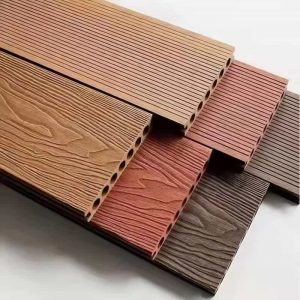
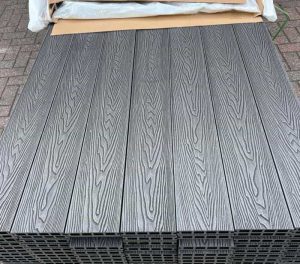
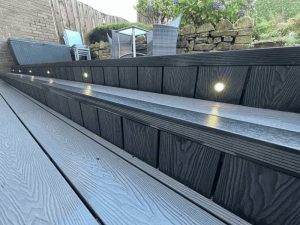
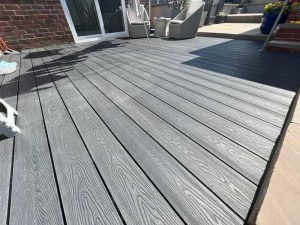
3D embossing refers to the surface treatment. Engraved embossing rollers press a deep, multi-directional grain pattern into the board, mimicking the knots, ridges and natural variation of real wood. Unlike a flat printed surface, the texture can be seen and felt.
Compared with a standard brushed finish, a 3D embossed surface gives you:
- A more realistic timber appearance, including visible grain depth and natural-looking variation between boards
- Better light and shadow play, so the deck looks richer in both sunshine and overcast weather
- Improved grip, because the raised texture channels water away from the surface
How 3D Embossed Composite Decking Is Made
Not all decking is manufactured to the same standard, so understanding the process helps you judge quality. 3D embossed WPC decking is a through-body (homogeneous) wood-plastic composite board: the same material runs from the core to the surface, and the wood-grain texture is pressed directly into that surface.
- Raw material selection and preparation — Wood fibre or wood flour (typically pine, poplar or other selected fibres) is dried to a low moisture content and ground to a consistent particle size. Dry fibre is essential for dense, stable boards.
- Mixing and compounding — The fibre is blended with recycled or virgin polymer, usually HDPE, plus additives such as UV stabilisers, lubricants, coupling agents and colour pigments. The mix is then compounded and, in many factories, granulated into uniform pellets, which improves consistency between production batches.
- Extrusion — The compound is melted and pushed through a precision die, forming solid or hollow profiles with the required cross-section and dimensions. Die design and temperature control determine the board’s density and structural strength.
- Sizing and cooling — The hot profile passes through a vacuum sizing table and cooling tank, which fix its shape, flatness and dimensional accuracy.
- Deep 3D embossing — The board surface is heated and pressed with engraved embossing rollers, which imprint a deep, multi-directional wood-grain pattern with natural-looking ridges, pores and variation. Because the texture is formed in the board itself rather than printed on, it has real depth you can see and feel. Embossing may be combined with surface brushing to bring out the grain.
- Colouring and surface finishing — Boards get their base colour from pigments mixed into the material. Additional tone variation may be added at the surface to enhance the natural timber effect and deepen the grain contrast.
- Cutting, inspection and packing — Boards are cut to standard lengths and checked for size, straightness, colour consistency and embossing quality before being packed for shipping.
Key Benefits of 3D Embossed Composite Decking
1. Realistic Wood Grain, Every Season
The main reason customers choose 3D embossed boards is aesthetics. Natural-looking colour tones combined with deep embossing produce a surface that resembles teak, oak, walnut or weathered driftwood. It suits everything from traditional British gardens to modern Scandinavian terraces and Mediterranean patios.
2. Genuinely Low Maintenance
Traditional timber decking usually needs cleaning, sanding, oiling or staining every year. With low maintenance composite decking, you can forget most of that. A routine wash with warm soapy water and a soft brush, plus a rinse with clean water, is usually enough to keep boards looking fresh.
3. Anti-Slip Performance for Wet Climates
From the Atlantic coast to the Baltic, many European gardens see plenty of rain, frost and damp. The raised texture of 3D embossed boards helps water drain from the surface and gives shoes more to grip. This makes them a strong choice for anti-slip decking around pools, terraces, balconies and commercial spaces.
4. Weather and Moisture Resistance
A well-formulated 3D embossed WPC board is built to cope with outdoor conditions. The material helps boards resist:
- Moisture damage, including rot, swelling and fungal decay, far better than untreated timber
- Insect attack, as boards are not a food source for termites or wood-boring beetles
- Everyday weathering, thanks to UV stabilisers in the formulation and a dense, deeply textured surface
- Fading, with slight lightening in the first months of outdoor exposure that then stabilises
Wipe up spills such as oil, red wine and barbecue grease promptly to keep the surface looking its best.
5. Splinter-Free and Family Friendly
Composite boards do not splinter, so they are comfortable for bare feet, children and pets. There are no exposed nails to work loose, and the surface stays smooth even after years of use.
6. Sustainable Choice
Many composite boards are made using recycled plastics and reclaimed wood fibre. Choosing composite over tropical hardwood reduces demand for virgin timber, and boards can often be recycled at the end of their life. If sustainability is a priority, ask your supplier about recycled content and environmental documentation.
Composite Decking vs Timber Decking
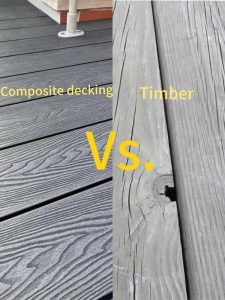
| Composite Decking | Softwood / Hardwood Timber | |
| Yearly maintenance | Minimal | Regular oiling, staining, sanding |
| Lifespan | Long, with reduced risk of rot | Depends heavily on treatment and species |
| Splinters | None | Common as boards age |
| Colour stability | Good, stable after initial weathering | Greys and weathers unevenly |
| Upfront cost | Higher | Lower |
| Long-term cost | Often lower over the product’s life | Increases with maintenance |
Timber can be cheaper at the start, but once you factor in treatments, replacement boards and your own time, composite is often the more economical choice over the long run.
Where to Use 3D Embossed Composite Decking
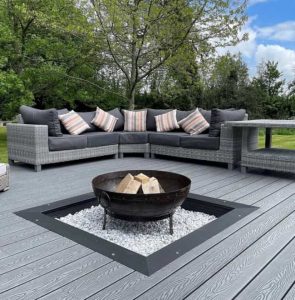
- Residential gardens and terraces, the most common application
- Balconies and rooftop terraces, where low maintenance is especially valuable
- Poolside areas, thanks to the anti-slip surface
- Restaurants, hotels and café terraces, which need a premium look and fast cleaning
- Boardwalks, jetties and public spaces, where durability and slip performance matter
- Cladding and fencing, since many composite ranges include matching wall panels
Installation Tips for Best Results
Even the best decking needs proper installation. These general guidelines apply to most projects, but always follow the specific instructions supplied with your boards.
- Build a solid, level sub-structure.Use suitable composite, aluminium or treated timber joists, and space them according to the manufacturer’s recommendations.
- Allow ventilation.Leave adequate airflow beneath the deck and never lay boards directly on a sealed surface without a proper gap.
- Leave expansion gaps.Composite boards expand and contract slightly with temperature, so leave gaps at board ends and edges as specified.
- Use the recommended clip system.Hidden clips give a clean, screw-free finish and allow for natural movement.
- Store boards flat and drybefore installation, and keep them out of direct sunlight for extended periods.
- Plan the layout.Mixing board lengths and orientation can create a more natural, timber-like appearance.
How to Clean and Care for Your Deck
- Sweep regularly to remove leaves and debris
- Wash with warm water, mild detergent and a soft brush, working along the grain
- Clean spills promptly, especially oil, red wine and barbecue grease
- Avoid harsh chemicals and abrasive tools that can damage the surface
- Use a low-pressure wash if needed, keeping the nozzle at a safe distance
How to Choose the Right Supplier
For importers, wholesalers and contractors, the supplier matters as much as the product. Ask about:
- Board construction: solid or hollow profile, density, wall thickness and material formulation
- Colour consistency between production batches
- Test reports and certification documents
- Warranty terms, including what is covered (structural defects, fading, etc.)
- Range of colours, sizes and accessories, such as clips, edging and fascia boards
- MOQ, lead times and packaging for export to Europe
- OEM/ODM options, including custom colours, embossing patterns and private labelling
- After-sales support and technical guidance
Kosa Deck offers a wide range of 3D embossed composite decking boards and matching accessories, with export experience to European markets. Our team can help you choose colours, sizes and specifications to suit your project or customer base.
Frequently Asked Questions
How long does 3D embossed composite decking last?
With correct installation and normal care, quality composite decking is designed to last for many years (20+ years), and many manufacturers offer long warranties. Actual lifespan depends on product quality, climate and use, so always check the warranty terms.
Does composite decking get hot in summer?
Like any outdoor surface, composite decking can become warm in direct sunlight, especially in darker colours. Lighter shades stay cooler, and the embossed texture can help reduce the feeling of heat compared with very smooth surfaces.
Is 3D embossed composite decking slippery when wet?
The raised texture is designed to improve grip in wet conditions. For high-risk areas such as pool surrounds, ask for slip-resistance test data for the specific board.
Does composite decking fade over time?
Some slight lightening can occur in the first months of outdoor exposure, which is normal. UV-stabilised boards are designed to stabilise after this initial period.
Can composite decking be used in cold or wet climates?
Yes. Composite boards are widely used across the UK, Scandinavia and Central Europe. They resist rot and moisture, and they do not need the seasonal treatments timber requires. Correct installation with proper drainage and ventilation is important.
Is composite decking eco-friendly?
Many composite boards use recycled materials and avoid the need for tropical hardwood or chemical timber treatments. Ask your supplier for details on recycled content and environmental compliance.
What is the difference between 3D embossed WPC decking and co-extruded decking?
3D embossed WPC decking is a through-body board with a deep wood-grain texture pressed into the surface, offering a natural look, good grip and excellent value. Co-extruded (capped) decking adds a separate protective polymer shell around the core for extra stain and fade resistance, usually at a higher price. The right choice depends on your budget, climate and project requirements.
Can I get samples before ordering?
Yes. We recommend checking samples in person to assess colour, texture and quality. Contact us to request samples for your project.
Conclusion
3D embossed composite decking gives you what timber decking promises without the routine maintenance: authentic wood grain, safe underfoot performance, and lasting good looks in all weather. Whether you are upgrading your own garden, specifying materials for a commercial project or sourcing products for your European customers, it is a smart, practical choice.