
What Is WPC 3D Deep Embossed Decking?
WPC stands for wood-plastic composite. The board is made from wood fiber, HDPE, and a small share of additives: coupling agents that bond fiber to plastic, lubricants for processing, and UV stabilizers and pigments for color and weather resistance.
The material is mixed to a uniform blend and extruded through a die into the board profile, either solid or hollow. Because the color and composition run through the whole board, there is no separate surface skin to chip, peel or wear through. A scratch or scuff shows the same color underneath, which is one reason this type of board holds up well to everyday wear.
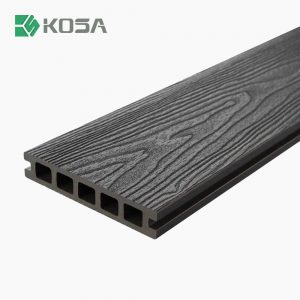
“3D deep embossed” describes the surface finish. While the board is still warm and workable, engraved steel rollers press a pattern into its surface. A standard emboss leaves a faint imprint. A deep emboss creates real relief, with ridges, pores and knots that catch light and give shoes and bare feet something to grip. Why Deep Embossing Suits Outdoor Decks
Why Deep Embossing Suits Outdoor Decks
Grip when wet
Rain, dew, pool splash and melting frost all leave a thin film of water on a deck. On a smooth board that film acts like a lubricant. A deeply textured surface breaks it up and carries water into the grooves, so traction is better on steps, ramps, pool surrounds and shaded decks that stay damp.
A natural look in changing light
A printed or lightly embossed grain looks flat because it casts no shadow. Deep embossing creates tiny highlights and shadows that shift from morning to evening, so the deck reads as a natural material instead of a uniform plastic surface. Photographs of the same deck at noon and at dusk look noticeably different, and that variation is a large part of the appeal.
Everyday wear stays out of sight
Chair legs, planters, grit under shoes and dragged furniture all leave marks. On a smooth surface each one stands out. A textured surface scatters light, and the through-body color means shallow scratches don’t expose a different layer, so the deck looks good for longer.
Less glare
Smooth boards can reflect hard sunlight, which is tiring on a bright terrace. A deep emboss gives a softer, more matte appearance.
How the Decking Boards Are Made
Most performance problems trace back to a specific production step, so it helps to know the process.
- Drying the fiber. Wood fiber is dried to a low moisture level before mixing. Excess moisture causes bubbles, voids and weak boards that absorb more water in service.
- Mixing and compounding. Fiber, resin and additives are blended in controlled ratios and compounded into a consistent material.
- The material is forced through a die to form the profile, solid or hollow, with a uniform composition from surface to core.
- Just after the die, patterned rollers press the grain into the surface. Roller depth, board temperature and line speed all matter. If the surface is too cool the pattern comes out shallow, and if it is too hot the detail smears.
- Cooling and sizing. Vacuum calibration tanks hold the profile to tolerance as it cools.
- Optional brushing. Some manufacturers add a light brushing pass to soften the grain transitions and bring out fine detail.
- Cutting and inspection. Boards are cut to length and checked for color, texture and dimensions before packing.
A well-run factory can explain how it controls embossing depth and color between batches. If a supplier can’t answer, take that as a warning.
How It Performs Outdoors
Sun and UV
UV light slowly lightens pigments in all outdoor materials. Expect some color change during the first weeks and months of exposure as the surface weathers, after which a good board settles and holds its tone. Quality boards contain UV stabilizers in the formulation. Ask for accelerated weathering test results (QUV or xenon arc, with hours and color change values) instead of relying on the phrase “fade resistant.”
Heat
Composite decking warms up in direct sun, and dark colors warm up more. A textured surface generally feels more comfortable than a smooth, dark one, but if your deck gets sun all day, lighter shades such as sand, light grey or natural teak tones are the better choice for bare feet.
Rain, moisture and mold
Water is the main enemy of any wood-based material. In WPC, the plastic resin surrounds and encapsulates the fibers, and a dense, well-compounded board absorbs very little. Poorly made boards with too much fiber or too little bonding can take on water over time, leading to swelling, staining or mildew. Good drainage and airflow under the deck are as important as the board itself.
Frost and freeze-thaw
In cold regions, water that enters a low-quality board and freezes can cause cracking and surface damage. Dense, properly compounded boards perform much better. If winters are hard where you live, ask the supplier for freeze-thaw test data or cold-climate references.
Coastal and pool environments
WPC doesn’t rust or rot, which gives it an edge over timber near salt air and chlorinated water. The deep texture adds grip around wet areas. Use stainless steel fixings, and rinse the deck with fresh water now and then in salt-heavy locations.
Insects and decay
Because the wood fiber is encapsulated in plastic, WPC is far less attractive to termites and decay fungi than untreated timber. No chemical treatment is needed, which is a major reason composite is chosen in humid and tropical regions.
Fire performance
Requirements vary by country and project type. Many markets ask for a rating such as ASTM E84 Class B, or Bfl-s1 under EN 13501-1. Request the test report for the specific product and check what your local code requires, especially for decks attached to buildings or used in public spaces.
3D Deep Embossed vs. Other Decking Surfaces
| Surface | Appearance | Wet grip | Upkeep | Best for |
| Smooth | Clean, modern | Lowest | Wipes easily, shows scratches | Sheltered, low-traffic areas |
| Light embossed | Subtle texture | Moderate | Easy | Budget residential decks |
| Wire-brushed | Soft, aged look | Good | Moderate | Traditional gardens |
| 3D deep embossed | Pronounced, realistic grain | Very good | Brush clean; texture holds some dust | Patios, pool decks, terraces, boardwalks |
| Real hardwood | Natural | Good when new | Regular oiling and sanding | Owners who enjoy maintenance |
There is one honest trade-off. Deeper texture holds more fine dust and pollen than a flat surface, and an uncoated WPC surface is more likely to pick up oil and grease stains if they are left to sit. Both are easy to deal with when cleaned promptly, but the deck isn’t zero-maintenance.
Where It Works Best
Home decks and patios. The most common use. You get the look of hardwood without annual sanding, staining or sealing.
Pool surrounds. Slip resistance, no splinters and resistance to chlorinated water make it a natural fit. Choose lighter colors in full sun.
Balconies and rooftop terraces. WPC is lighter than stone or concrete pavers, which helps on structures with load limits. Check fire requirements for elevated installations.
Gardens, pergolas and gazebos. Small projects where the owner wants to build once and not revisit it every spring.
Boardwalks, piers and park paths. Rot resistance and surface grip suit public walkways, as long as the structure and fixings are designed for the loads.
Restaurant and café terraces. Handles foot traffic and moved furniture while keeping a warm, timber-like look.
Installation Basics for Outdoor Decks
A good board installed badly will still cause trouble. The fundamentals are simple.
Build a proper subframe. Use a flat, stable, well-drained base. WPC or aluminum joists resist moisture better than untreated timber. For most 25 mm boards, joist spacing runs around 300 to 400 mm on center. Reduce it for diagonal layouts, heavier loads or commercial use, and follow the manufacturer’s guide.
Slope for drainage. Build in a slight fall away from buildings so water runs off rather than pooling. Even a gentle slope noticeably extends how long a deck stays clean.
Keep air moving underneath. Leave clear ventilation space below the boards and avoid sealing off the perimeter. Trapped moisture is the main cause of early problems.
Allow for expansion. Composites expand and contract with temperature. A board several meters long can change length by a few millimeters between a cold night and a hot afternoon. Leave gaps at board ends and against walls or posts as specified, sized for your local temperature range and not just the day of installation.
Use the right fixings. Hidden clip systems give a clean surface and allow controlled movement. In coastal, pool or humid environments, use stainless steel.
Finish the edges. Use matching end caps or fascia boards on exposed edges, so the cut ends of boards don’t face the weather unprotected.
Cut and handle with care. Standard woodworking tools work, with sharp carbide blades. Avoid leaving cut ends sitting in standing water.
Blend the boards. Draw from several packs while laying to even out subtle shade differences between production batches.
Cleaning and Maintenance
Deep embossed decking is low-maintenance, not no-maintenance. A simple routine keeps it in good shape.
- Sweep or blow off leaves and debris regularly. Wet leaves left to rot can stain any outdoor surface.
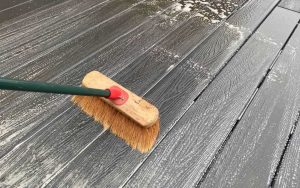
- Wash a few times a year with warm water and a soft-bristle brush, working along the grain to lift dirt out of the texture.
- Clean grease, wine, sauces and oil spills as soon as possible with mild dish soap and water. The sooner they’re treated, the easier they come out.
- In shaded or humid spots, watch for mildew and treat it early with a gentle composite-safe cleaner.
- Use a pressure washer only on a low setting, with a wide fan nozzle and the tip held well back. Close, concentrated pressure can flatten the embossing.
- Don’t sand, paint or oil the boards, since sanding removes the texture. If a board is badly damaged, replace it.
- In snowy regions, use a plastic shovel and avoid metal blades. Choose de-icing products that are suitable for composite decking.
Frequently Asked Questions
Is WPC 3D embossed decking good for rainy climates?
Yes, as long as the board is dense and well made, and the deck has good drainage and airflow underneath. The textured surface also gives better grip in the wet.
Will it fade in strong sunlight?
A slight lightening during the first months of exposure is normal for most composite decking. After that, a quality board holds its color well. Ask for weathering test data to confirm.
Does it get too hot to walk on?
Dark boards in full sun can get quite warm. Lighter colors are more comfortable, and a bit of shade helps.
Can I use it around a swimming pool?
Yes, it’s one of the best applications. Use stainless steel fixings and keep the deck well drained.
Is it suitable for cold climates?
Yes, with a dense, quality board and a deck that drains properly. Ask for cold-climate performance information if you’re in a harsh region.
Will the embossing wear off?
The texture lasts for years under normal residential use. Heavy commercial traffic will soften it gradually, and low-grade boards with poor density wear faster.
How long does it last?
Well-made, properly installed WPC decking commonly serves 10 to 20 years outdoors. Climate, drainage, installation and product quality all make a difference.
Is it environmentally friendly?
WPC typically uses recycled plastic and recovered wood fiber, and it needs no staining or chemical treatment during its life. Ask suppliers about recycled content and environmental certifications.
Final Thoughts
WPC 3D deep embossed decking suits people who want an outdoor deck that looks like timber, grips well when wet, and doesn’t demand a yearly maintenance routine. The embossing is the part you notice first, but what keeps the deck performing for years is the board underneath: a balanced formulation, good density, low water absorption and consistent manufacturing.
When you compare suppliers, ask for full-length samples and test reports, not just catalog photos. Wet a sample and stand on it, leave one in direct sun for an afternoon, and soak a cut piece in water overnight. A few simple checks like these tell you more than a glossy brochure.
If you’re planning an outdoor project and want help choosing the right profile, color and installation system for your climate, send us your site details and we’ll suggest a suitable option.